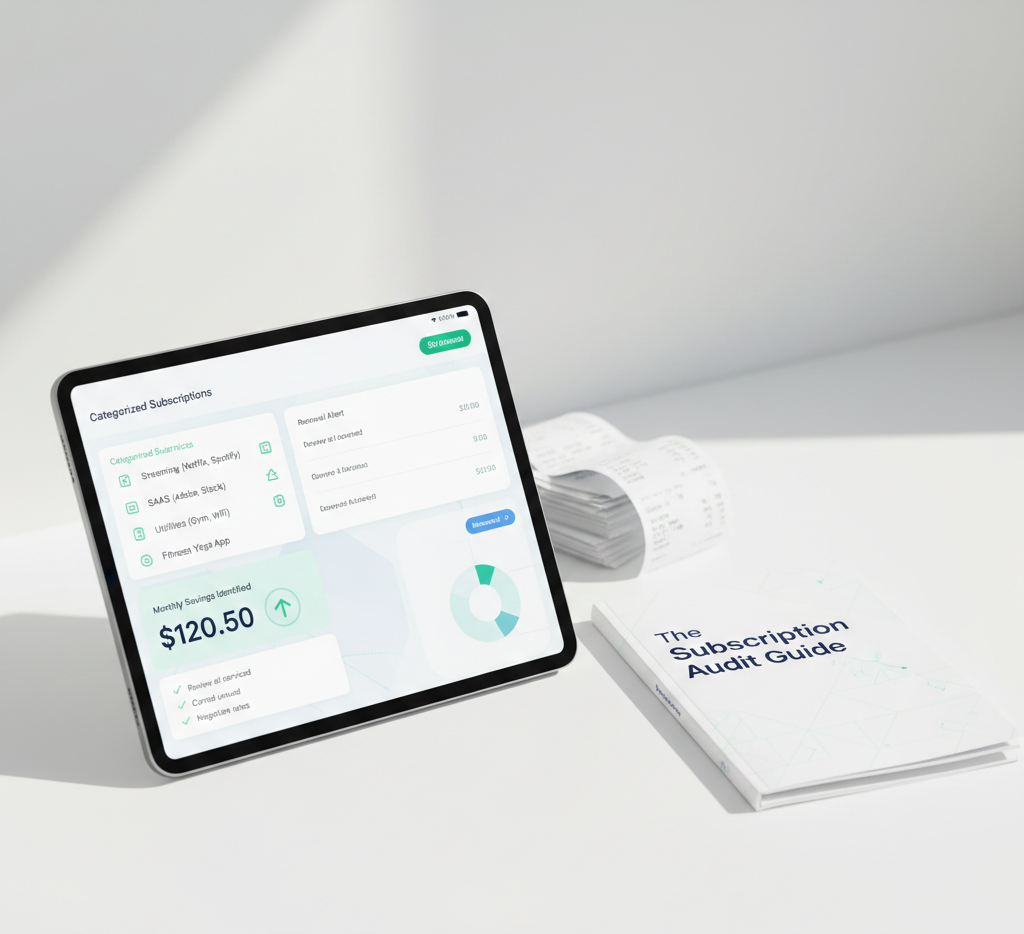
There is a critical difference between tracking subscriptions and managing them. A basic tracker shows you what you're paying for. A true subscription manager actively works to protect your budget — warning you before charges occur, flagging when vendors silently raise their prices, and identifying when you're paying twice for the same feature set.
In 2026, subscription management has evolved from a personal finance niche into an essential business operations tool. With SaaS spending now representing one of the largest operational expense categories for agencies, startups, and freelancers, a capable subscription manager app is no longer optional. This guide covers the best options available and explains exactly what to look for.
Subscription Manager vs. Subscription Tracker: What's the Difference?
The terms are often used interchangeably, but they describe meaningfully different levels of capability.
The best subscription manager apps combine both: they automatically detect your subscriptions and then actively manage the relationship between you and each vendor — alerting you to upcoming charges, price changes, and usage patterns before they cost you money.
A complete subscription management workflow has four stages: Discovery (finding all charges), Monitoring (tracking renewals and price changes), Optimization (removing duplicates and unused services), and Action (canceling or downgrading with direct links). Evaluate any app against all four stages, not just the first one.
Best Subscription Management Apps Compared
| Feature | SubDupes | Rocket Money | Cledara (Teams) | TrackMySubs |
|---|---|---|---|---|
| Auto-detection of subscriptions | ✔ Email receipts | ✔ Bank sync | ✔ Virtual card | ✘ Manual only |
| Renewal alerts before charge | ✔ T-3 and T-1 days | ✔ Paid feature | ✔ Custom alerts | ✔ Calendar alerts |
| Price hike detection | ✔ Automatic | ✘ Not available | ✔ Via spend reports | ✘ Manual update only |
| Duplicate tool detection | ✔ AI-powered | ✘ Not available | ✔ Category grouping | ✘ Not available |
| Cancellation links | ✔ Direct links per sub | ✔ Concierge (paid) | ✔ Vendor portal links | ✘ Not available |
| Bank access required | No | Yes (Plaid) | Virtual card required | No |
| Team / multi-user support | ✔ Pro plan | ✘ Personal only | ✔ Built for teams | ✘ Personal only |
Several apps in the subscription management space generate revenue by selling aggregated spending insights to financial services companies. When you share your bank transactions, you are potentially sharing your income level, spending categories, and financial health with third parties. Always review the privacy policy before granting bank access to any app.
How to Set Up a Complete Subscription Management System
-
Step 1: Run a full subscription discovery audit.
Check Apple ID, Google Play, PayPal automatic payments, and search your email for billing keywords. Build a complete list of every active charge. SubDupes automates this by scanning email receipts within 90 seconds of connecting your inbox. -
Step 2: Categorize by business value.
For each subscription, assign one of three tags: Active Use (using weekly), Low Use (using occasionally), Zombie (not used in 30+ days). Target all Zombie and Low Use services for cancellation or downgrade first. -
Step 3: Consolidate duplicates.
Identify services that serve the same function. Common overlaps: multiple cloud storage services (Dropbox + Google Drive + iCloud), multiple video conferencing tools (Zoom + Teams + Google Meet), multiple design platforms. Keep one, cancel the rest. -
Step 4: Set up pre-renewal alerts.
Configure alerts to fire at least 3 days before each renewal. This gives you a decision window to cancel if needed. SubDupes sends automated T-3 and T-1 alerts for every tracked subscription. -
Step 5: Schedule a quarterly review.
Subscription needs change as your work changes. Set a calendar event every 3 months to re-evaluate which services are earning their keep and which have become dormant.
Subscription Management for Teams and Businesses
For agencies and startups managing subscriptions across multiple team members, the stakes are significantly higher. Unused team seats, duplicated tools across departments, and unmonitored vendor price hikes can drain thousands of dollars monthly from the operating budget.
Clearline was paying for 31 separate SaaS tools across their team. When their operations lead ran a SubDupes audit using the team's shared billing inbox, the platform flagged 7 tools with duplicate functionality, 3 vendor price hikes that had gone unnoticed in the past 6 months, and 4 subscriptions tied to employees who had left the company. Total identified savings: $2,340/month.
Frequently Asked Questions
Manage every subscription from one private dashboard.
SubDupes automatically detects your subscriptions, alerts you before renewals, catches price hikes, and flags duplicate tools — all without bank account access. Start your free audit today.
Start Free Audit Now